






Matcha whisk (chasen): how to choose, use and care for it
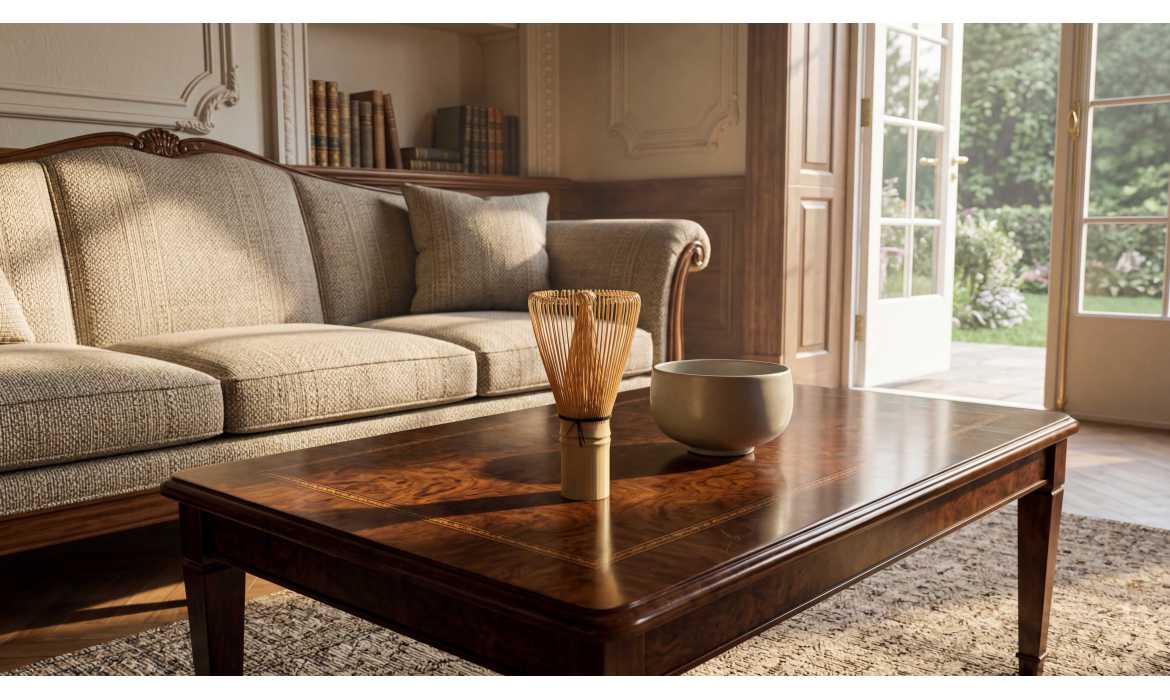
Choose a matcha whisk, or chasen, in bamboo, with fine, flexible tines. Soften it in hot water, then whisk for 15 to 30 seconds in a W shape, from the wrist, without pressing on the bottom of the bowl. Afterwards, rinse it in clean water without soap and leave it to dry on a holder.
What a chasen does
A matcha whisk is cut from a single piece of bamboo, split into dozens of fine tines. It disperses the powder in the water and works in air, giving a smooth drink with a fine foam. A spoon leaves lumps, because matcha is a very fine powder that does not dissolve: it stays in suspension.
How to choose a whisk
Three points are enough for everyday use:
- The material. Bamboo is the traditional choice: light, flexible when damp, and it will not scratch the bowl. The natural bamboo chasen (11 × 6 × 6 cm) fits this use.
- The number of tines. Common models have about 80 to 100. The more numerous and finer they are, the more easily foam forms. Whisks with fewer, thicker tines are used for thick matcha, known as koicha.
- The condition of the tines. They should be even, with no splinters and a well-formed inward curve.
If you are just starting, a set saves you from gathering the pieces one by one. The matcha set with brown bowl and the set with green bowl each include a bowl, a bamboo whisk and a scoop. More utensils are gathered under matcha sets and whisks.
A new whisk has tight, rather stiff tines. Before using it for the first time, soak it in lukewarm water for a few minutes, then rinse it. The tines open out gradually as you use it: this is normal, and foam often comes more easily after a few bowls.
How to use a matcha whisk
1. Prepare the bowl and whisk
Pour hot water into the bowl and soak the tines for about a minute, turning gently. The bamboo softens and is less likely to break. Empty the bowl and wipe it dry: the powder should not touch a wet surface.
2. Measure the matcha
Allow 1 to 2 g of powder per bowl, which is about two scoops with a chashaku, the bamboo scoop. If you have a fine sieve, sift the powder: lumps disappear faster.
3. Add the water
Pour in 60 to 80 ml of water at 70 to 80°C. Any hotter and the water brings out bitterness. Without a thermometer, let freshly boiled water stand for a few minutes.
4. Whisk
Hold the bowl with one hand and the whisk upright with the other. Whisk for 15 to 30 seconds, drawing a W or an M, moving your wrist and not your arm. The tines brush the bottom without pressing on it. Slow down at the end to break up the larger bubbles, then lift the whisk out from the centre of the bowl.
5. Drink straight away
The powder settles to the bottom after a few minutes, so drink your matcha without waiting. When choosing a cup or chawan, look for a shape wide enough to leave your wrist free.
How to care for a chasen
- Rinse it at once. Swish the tines in a bowl of lukewarm water: matcha dries quickly and clings to bamboo.
- No soap, no dishwasher. Soap leaves a taste and heat damages the bamboo.
- Drain it without twisting. Shake it gently, then reshape the tines with your fingertips.
- Air-dry it. The matcha whisk holder (chasen naoshi) keeps its shape and helps it dry. Avoid direct sun and sources of heat.
- Store it fully dry. Shut away damp in its box, bamboo can go mouldy.
Think about the powder too: once opened, it dislikes air, light and humidity. The natsume container is designed to keep it away from humidity and light.
Mistakes to avoid
- Using the whisk dry. Dry tines are brittle.
- Pouring on boiling water. The matcha turns bitter.
- Pressing on the bottom of the bowl. The tines get crushed and lose their curve.
- Whisking in circles. A circular motion works in little air, and the matcha stays flat.
- Leaving the whisk to soak. Long immersion weakens the binding and the bamboo.
- Choosing a bowl that is too narrow. The whisk has no room to move and the foam forms poorly.
Frequently asked questions
How long does a chasen last?
It depends on how often you use it and how well you look after it: often a few months with daily use, longer with occasional use. Replace it when several tines have snapped or mould appears. Bamboo that darkens over time is not a defect in itself.
Is a whisk holder essential?
You do not need one to make matcha, but it helps preserve the curve of the tines and makes drying easier. Without a holder, stand the whisk on its handle, tines up, in an airy spot, and keep an eye on its shape.
Can an electric frother replace a chasen?
A frother disperses the powder and makes foam, especially for a matcha latte. The bubbles are usually larger than with a chasen. For matcha made with water alone, the bamboo whisk remains the traditional tool.
Why does my matcha not foam?
The most common causes are water that is too hot, too much water, a movement that is too slow or circular, or stale powder. Try 60 ml of water at 75°C and a quick W motion.